
The stage: India Couture Week
Every year, the Fashion Design Council of India (FDCI) transforms the nation’s capital into an epicentre of grandeur for India Couture Week (ICW). It is the ultimate stage where centuries of Indian textile heritage meet the avant-garde imagination of top couturiers. Beneath halogen lights and amidst hushed anticipatory whispers, ICW is less about clothes and more about storytelling through silk, gold thread, zardozi, and architectural drapery—setting the visual rhythm for global bridal and occasion wear.
The spotlight: Arpita Mehta’s couture debut
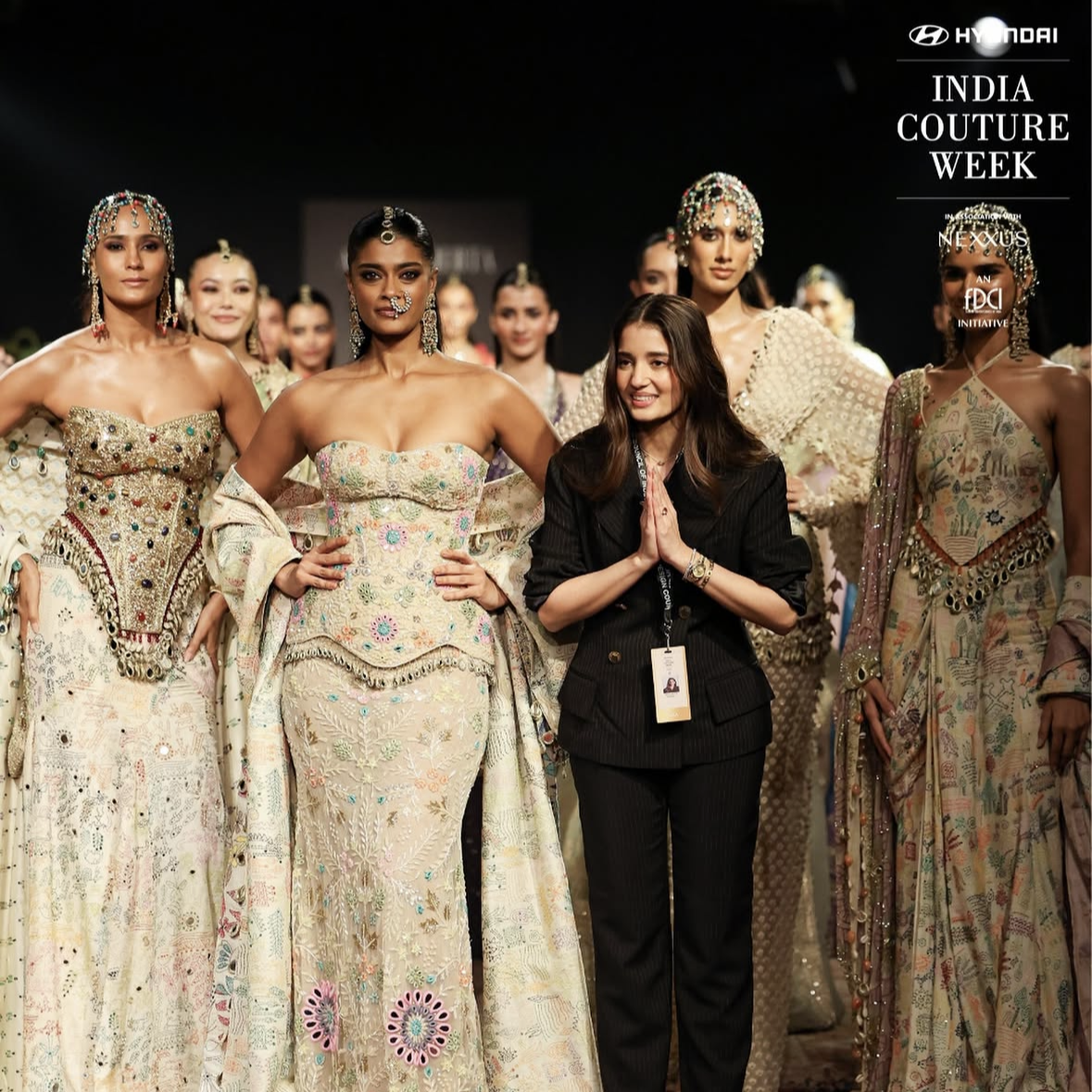
Known for over a decade for her playful mirror work, body-skimming silhouettes, and contemporary bohemian elegance, designer Arpita Mehta brought something undeniably fresh to the ICW runway: her debut couture collection, titled Ceremonial.
Rather than staging a standard catwalk, Mehta converted the venue into an intimate, 1970s/80s members-only lounge. Low ambient lighting flickered across brass fixtures, velvet-trimmed sofas, and plush Turkish-Persian style Jaipur Rugs. The soundtrack set the mood—a pulse of hybrid retro-house beats playing homage to classic tracks like Jimmy Jimmy and Saat Samundar Paar.
Ceremonial reinterpreted classic Indian textile traditions for the modern woman:
- Heritage Textiles: Bandhani, Banarasi brocades, tissue silks, and for the first time in Mehta’s vocabulary, hand-stitched Kantha embroidery.
- Signature Craftwork: Her signature mirror work was elevated by layering vintage-inspired gemstone embroidery.
- The Colour Progression: A slow, hypnotic shift opening in muted hues—coconut, rose tan, sage, seafoam—before deepening into moody violet and passionate sindoor red.
A night at ‘Ceremonial’
The air inside the dimly lit lounge carried the scent of fresh tuberose and warm velvet. As house beats blended into the nostalgic rhythm of 80s disco, the first model stepped into the room—not with the rigid posture of traditional couture, but with an effortless, hypnotic glide.
She wore a sculpted ivory gown draped in intricate Kantha thread work, the subtle sheen of embedded mirrors catching the low light like stars against twilight. Draped over her forehead was a cascading chainmail headpiece encrusted with multicoloured gemstones and pearls, blurring the boundary between garment and high jewellery.
As the show progressed, the atmosphere thickened with music and motion. Guests leaned in as soft sage and seafoam tissue sarees gave way to a dramatic, rich purple Bandhani lehenga paired with an off-shoulder corseted blouse. The mirror work didn’t just reflect the room’s warm glow; it scattered light across the velvet couches and carpeted floors, turning the entire audience into part of the set.
In an era where couture often feels bound by rigid tradition or sheer spectacle, Arpita Mehta’s Ceremonial delivered an understated truth: Indian heritage textiles aren’t artifacts locked behind glass—they are living, breathing crafts meant to dance, move, and celebrate alongside the women who wear them.
Read More:
Alia Bhatt at Cannes: A modern Maharani moment