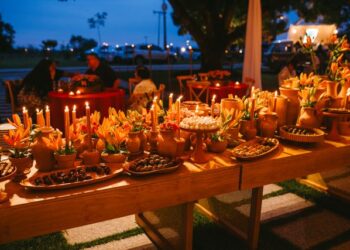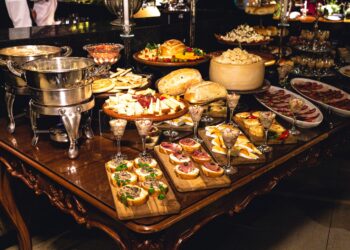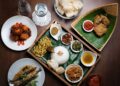

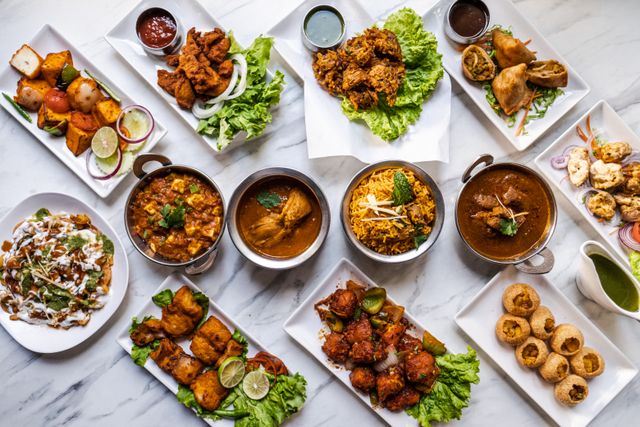
Indian wedding menus have started to read like airline route maps. Pasta stations sit near the chaat counter, sushi rolls turn up beside the biryani, and caterers say clients now ask for Italian, Thai, Mexican and Japanese as a matter of course.
The feast is going global. But the dishes that tie a wedding to a family are usually the regional ones, and they carry something an imported menu can’t: the taste of home. Here are seven tables that still hold on to it.
Kerala: the sadya
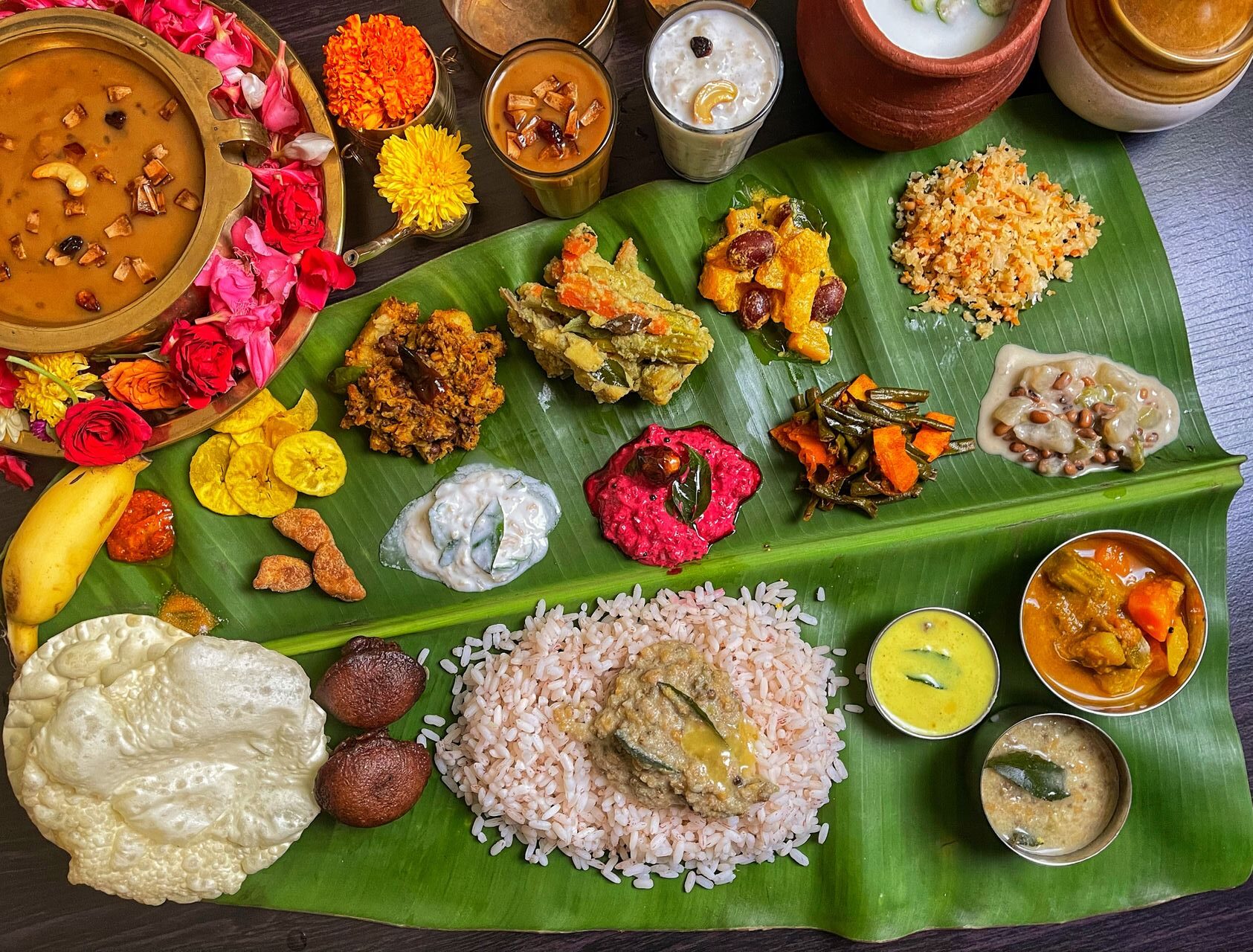
The sadya is vegetarian and served on a banana leaf, with more than 20 dishes arriving in a set order, from banana chips and pickles to rice and curries, before the payasam closes the meal. Guests eat with their hands. Kerala doesn’t have a single wedding feast, though. Christian weddings often serve appam with stew, and Malabar Muslim weddings may serve Thalassery biryani.
Kashmir: the wazwan
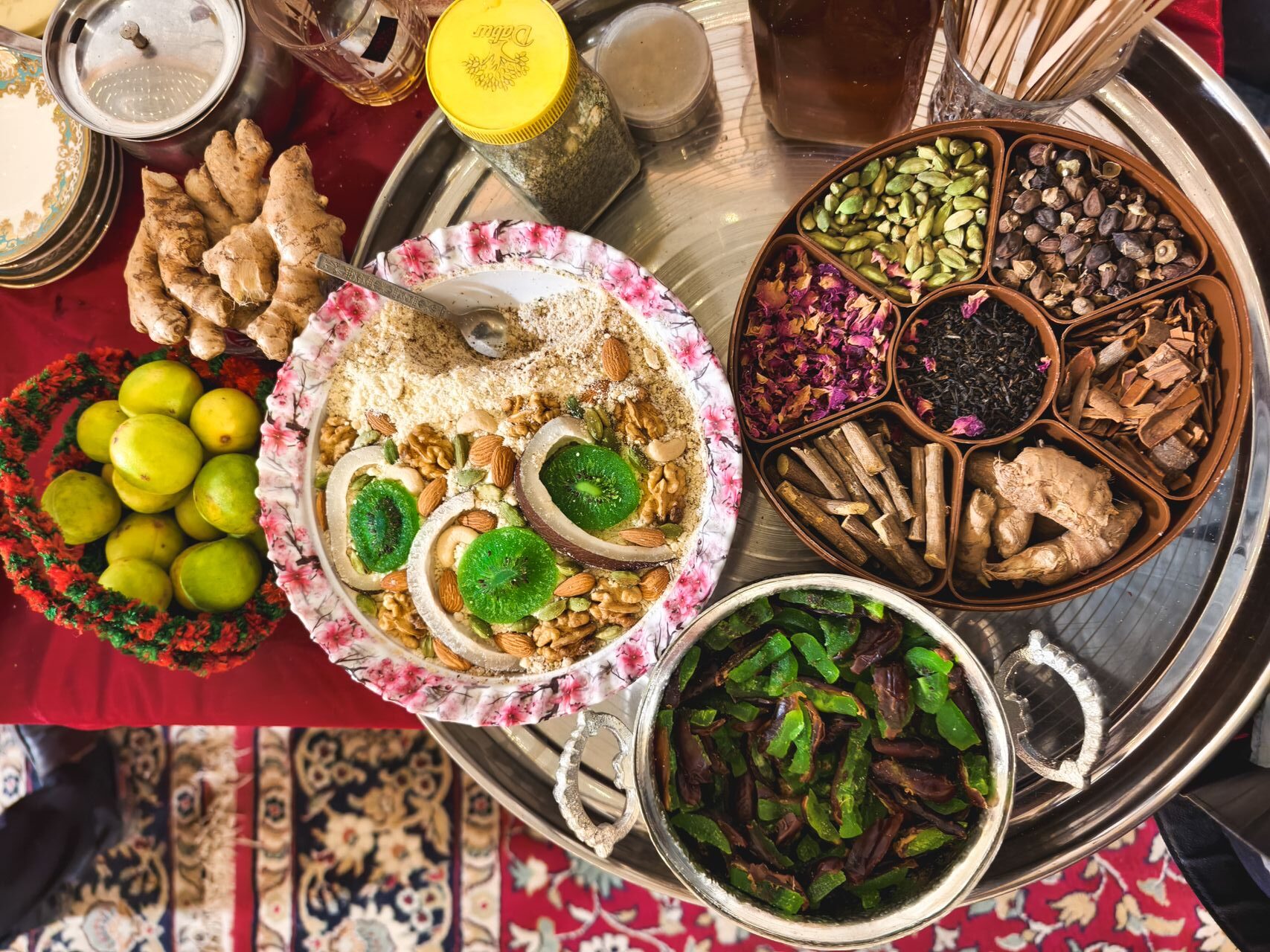
A traditional wedding wazwan can run to 36 courses, mostly lamb and mutton, cooked overnight by a team under a master cook, the vasta waza. Guests sit on the floor in fours and share one large copper platter, the trami, heaped with rice and topped with the first dishes, among them seekh kebabs and tabak maaz. Everyone washes their hands first, from a copper vessel. The dishes that matter most are rista, rogan josh, daniwal korma, aab gosh and gushtaba. Many weddings now serve a shorter version.
Bengal: the meal before the wedding
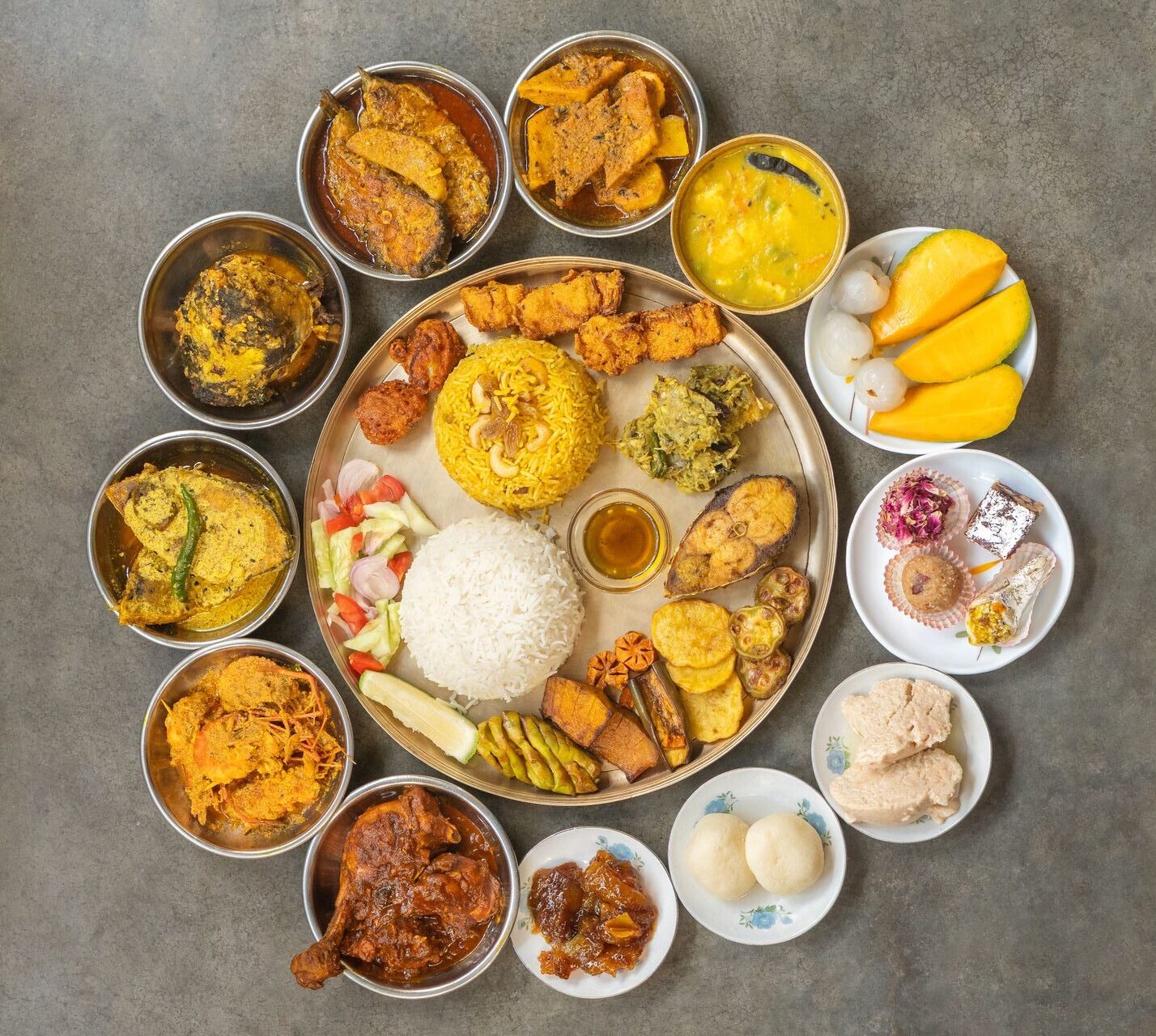
In Bengal, the feasting starts early. At the aiburobhat, literally “bachelor rice”, the family cooks the couple’s favourite dishes for the last meal before marriage, and it’s usually the mother who cooks. After the wedding, the bride is welcomed to the groom’s home with the bou bhat, a rice meal in her honour. Fish is central, and in many Bengali Hindu weddings it’s regarded as a symbol of prosperity and fertility, so expect bhetki paturi and fish curries alongside kosha mangsho.
Gujarat: a meal in stages
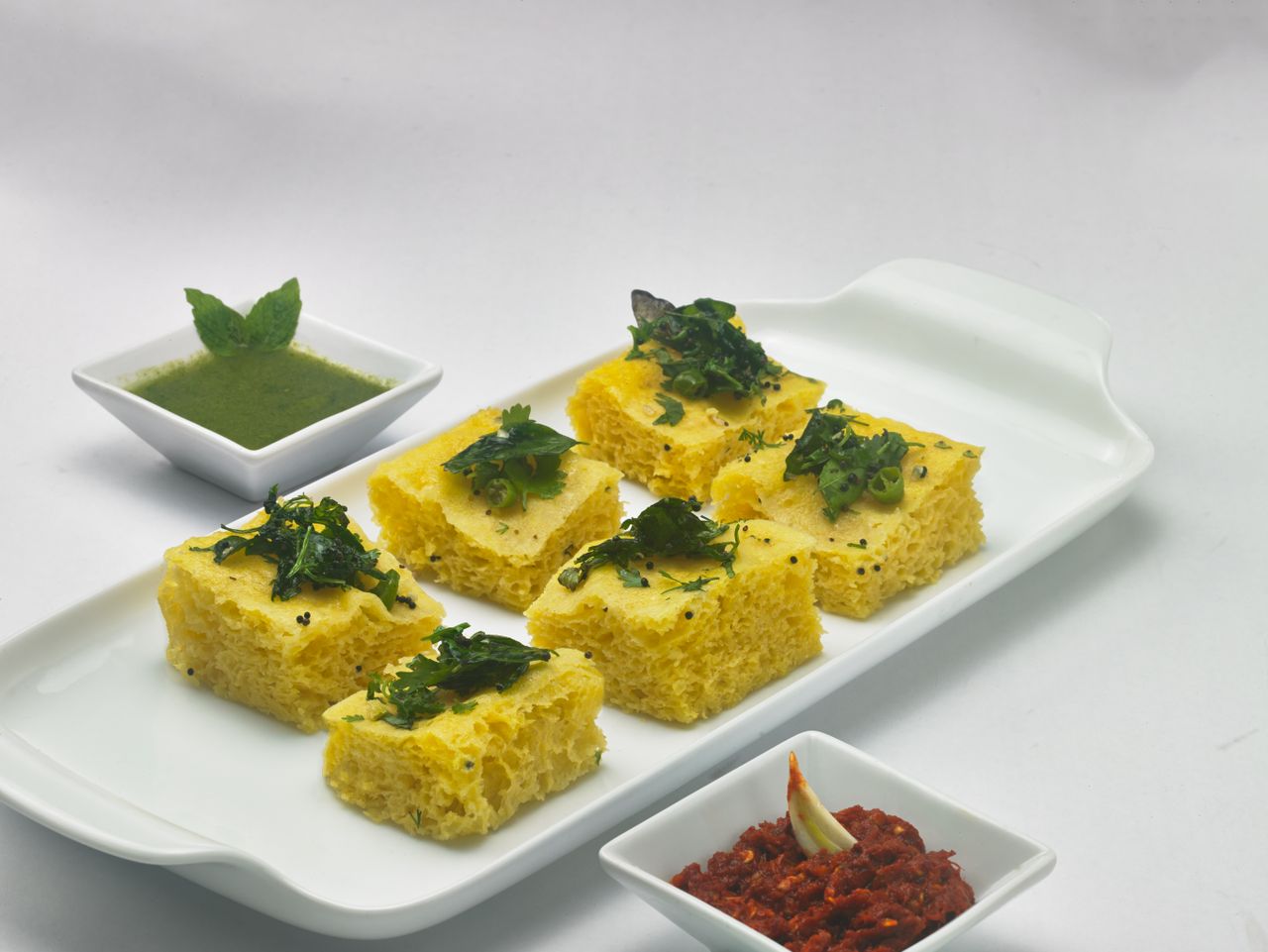
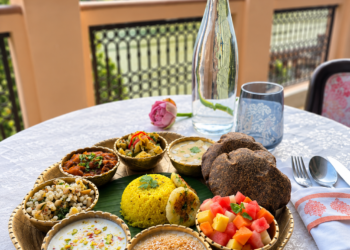
A Gujarati wedding meal tends to unfold rather than land all at once. Farsan comes first, dhokla among them, then the main thali with roti or puri, dal, kadhi, rice, vegetables, pickles, papad and buttermilk. A full thali can run to 10 to 20 items, balancing sweet against spicy and sour. Morning rituals get lighter fare, such as fafda with papaya chutney.
Rajasthan: dal baati churma
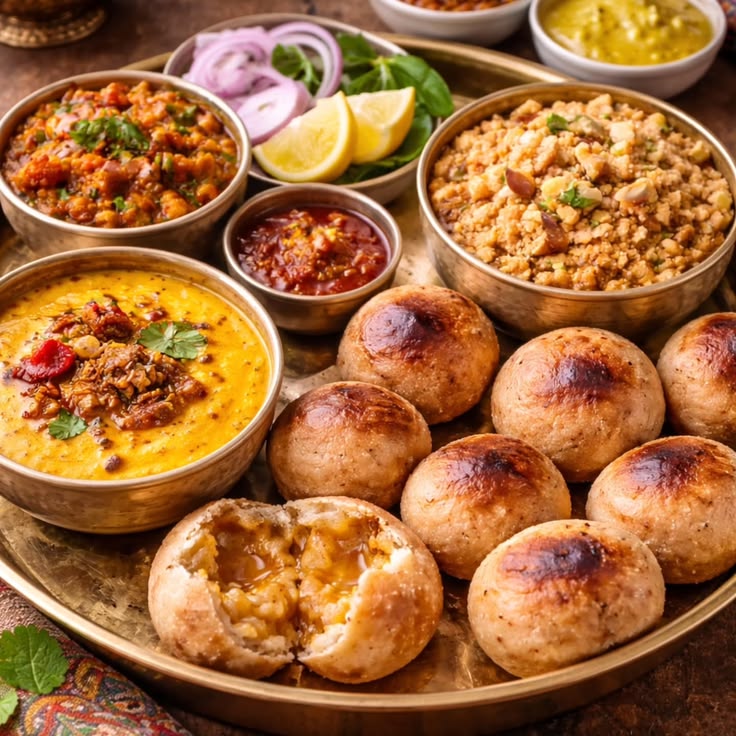
The dish most people link to a Rajasthani feast is dal baati churma: wheat baatis baked and soaked in ghee, eaten with spiced dal and sweet churma. Caterers say a wedding spread isn’t complete without churma ladoo.
Hyderabad: biryani first
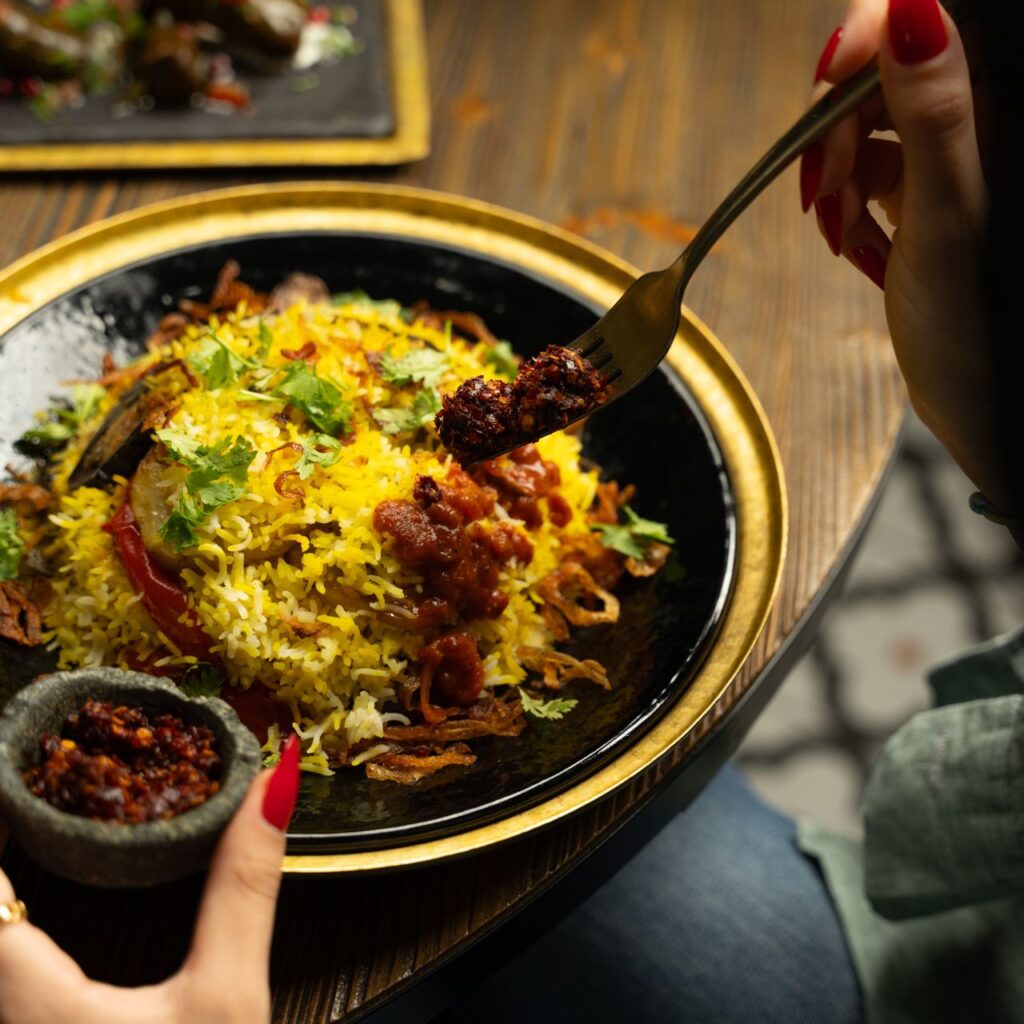
Dum biryani leads, with mirchi ka salan and bagara baingan as the sides. The table closes with double ka meetha or khubani ka meetha, and haleem sometimes joins the menu despite its Ramadan associations.
Maharashtra: the pangat
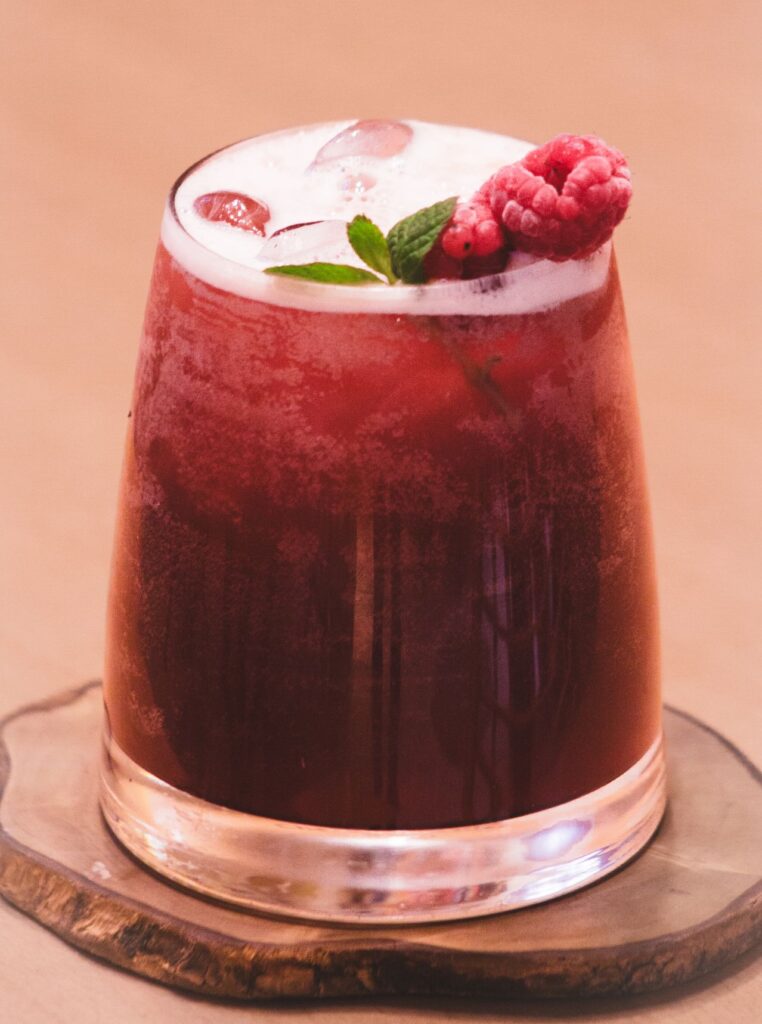
The pangat is a traditional seated meal. Guests sit on the floor in rows, eating from a banana leaf or leaf plate, while servers move along the rows pressing second helpings on them. The menu is often vegetarian, built around varan bhaat, masale bhat, puran poli and shrikhand. Kokum sherbet is the usual welcome drink.
Why the Regional Table Holds On
Global menus will probably keep growing, because guests enjoy something new. The regional feast does a different job. It’s the meal a mother cooks for the aiburobhat, the sadya a Kerala family has served for generations, the trami that puts four relatives around one plate.
These dishes are less about choice than belonging, which is why a regional dish can sit comfortably beside a pasta station and still be the one a family cares about most.
There’s a practical side too. Banana leaves, a trami for four, floor seating and a cook who knows the order of service all need arranging in advance, so ask the caterer early. For couples, the simplest way to get both is to pair one global counter with one dish from the family’s own table. Guests get something new, and the family gets something that feels like theirs.