
From the tikka of the north to the shola crown of Bengal, the Indian bride’s headgear changes with every region, and each piece carries a story worth passing on.
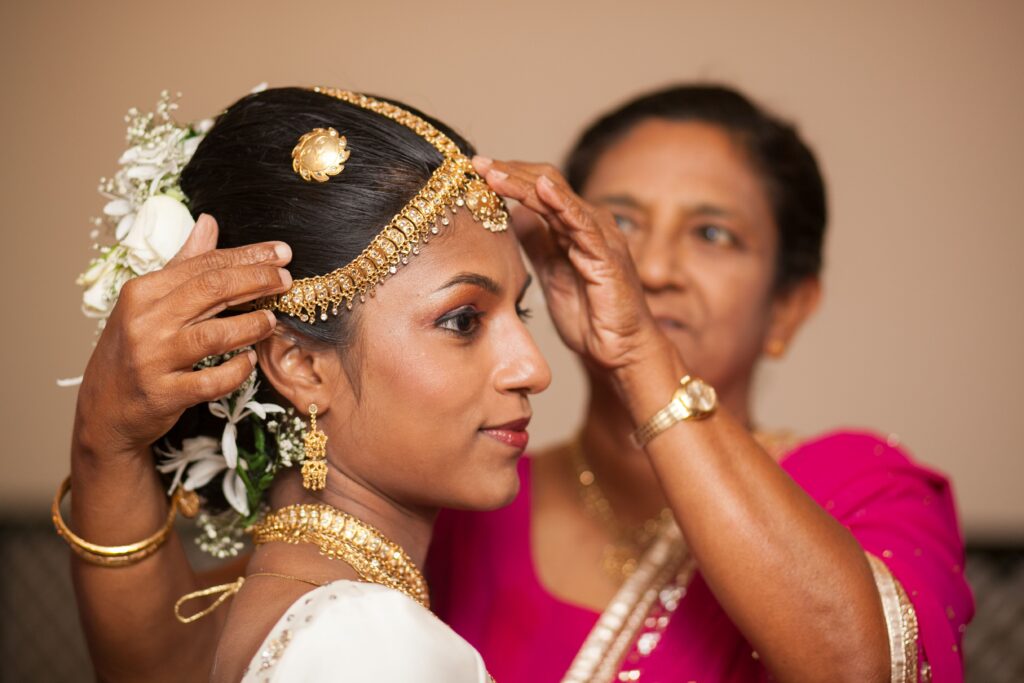
Ask any bride what she remembers most about getting ready, and many will point to the moment the last pin went in. The headpiece, set in place by a mother, aunt or sister, is often the final touch before she steps out. It is a small moment between generations, and it says a great deal about where she comes from.
Maang tikka, matha patti, bor and borla are different head adornments from different cultures, each rooted in its own region and tradition. These are the kinds of pieces families treasure and hand down. Here’s a journey across the country, one heirloom at a time.
The North: tikka, matha patti and passa
The journey begins with the best-known piece. The maang tikka is a pendant that hangs at the forehead from a chain secured at the hair parting. Add more chains and the look expands, which is how the matha patti comes in, framing the whole upper face.
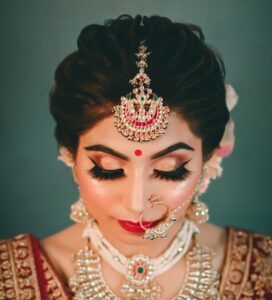
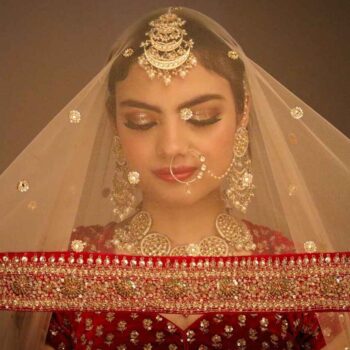
From the forehead, the eye travels to the side. The passa, or jhumar, is a side ornament worn at the temple, traditionally associated with Mughal and North Indian bridal traditions. Muslim brides in South Asia often wear it on the left side of the head.
Rajasthan: the borla
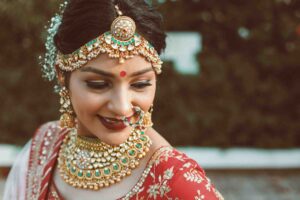
Travel west and the shape changes. The borla is a round, dome-shaped Rajasthani head ornament, typically decorated with meenakari enamel or stones. It sits at the centre of the forehead instead of dangling like a pendant, and it’s one of the most distinctive pieces in Rajasthani bridal jewellery.
Maharashtra: the mundavalya
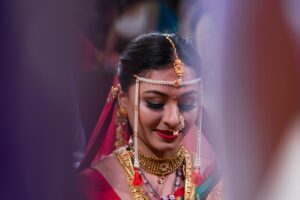
Move south from Rajasthan and the mood softens. In Maharashtra, the headpiece becomes quieter and more delicate. The mundavalya is a string of pearls or gold beads, tied in a knot at the back and draped over the forehead. It is worn by both brides and grooms in the state, which sets it apart from many of its counterparts.
Bengal: the shola crown
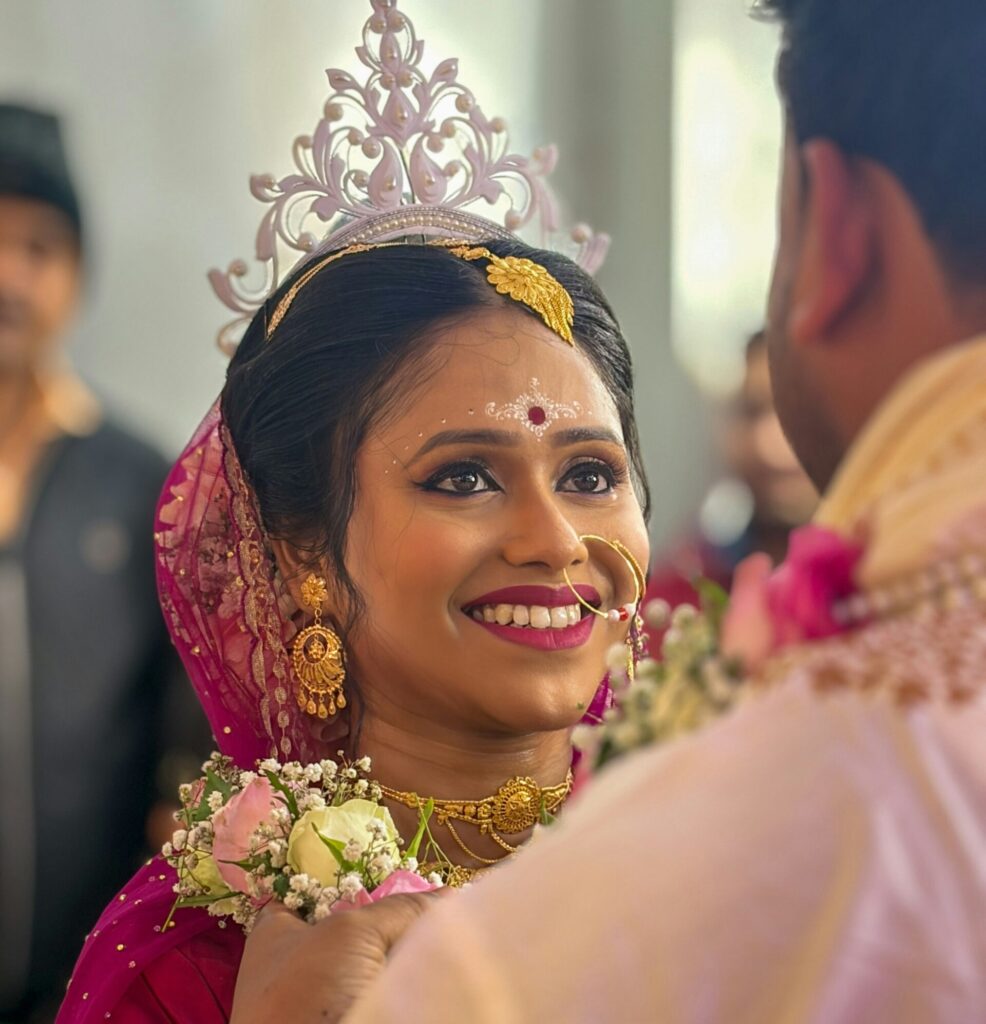
Head east and the material itself changes. Bengali weddings feature the topor, a conical headgear of white sholapith traditionally worn by the groom, while the bride wears a related, differently shaped headgear called the mukut. The mukut’s white colour is said to represent sanctity and good fortune.
The South: sun, moon and braid
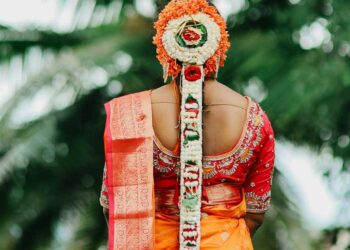
Travel to the south and the ornament moves from the forehead into the hair. A South Indian bridal look is often completed with a nethichutti, similar to a maang tikka, along with a sun and moon hair accessory called surya and chandra pirai. A braid adorned with ornaments, known as rakodi, finishes the look.
The hills and the valley
Even the mountains have their own crowns. The bridal mukut in Uttarakhand’s Kumaon typically carries images of Radha and Krishna. In Kashmir, the taranga was the usual headscarf of Kashmiri Pandit women until the late 1960s, and today it is worn by the bride on her wedding day.
Today: old pieces, new looks
With so much heritage to choose from, modern brides are mixing the old and the new, and a family piece can sit comfortably beside a contemporary outfit. A minimalist bridal set often includes a maang tikka alone, and a lightweight matha patti with minimal detailing suits daytime rituals. A simple passa works well for a sangeet or engagement.
A practical tip: traditional tikkas need a center parting to hook onto, and with a side parting, a passa is a better choice. It’s also worth trying the headpiece with the hairstyle and veil at a trial, especially if it’s a treasured piece you want to wear with care.
Whatever the region or style, the headpiece is more than an ornament. It’s a way to carry home, family and tradition into the mandap, one pin at a time, and to hand them on to the next bride who wears it.